
Annapurna Base Camp Trek Guide: Route, Highlights & Travel Tips

Anika Shah
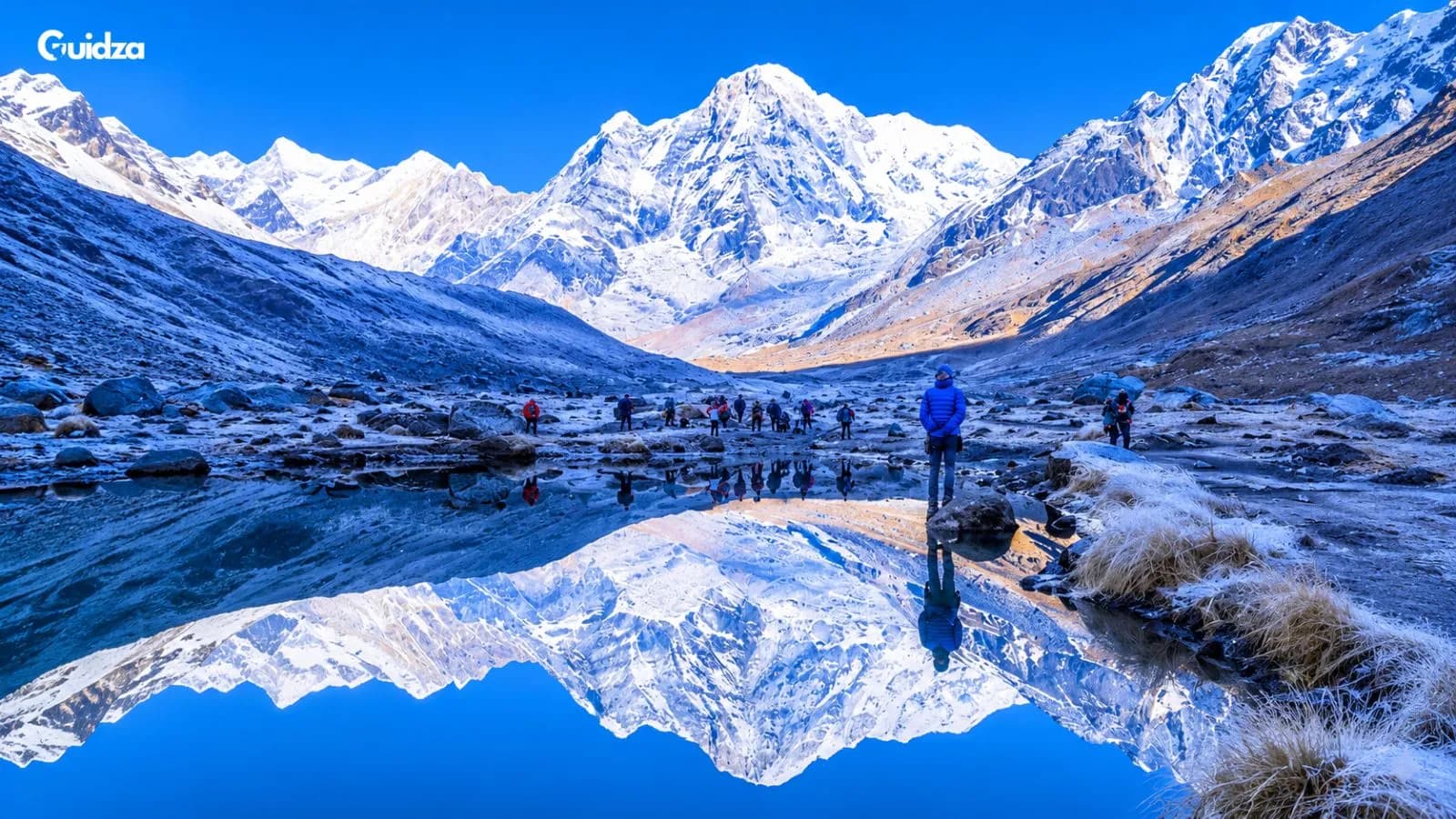
Sitting at the heart of a ring of Himalayan giants, Annapurna Base Camp is one of the most rewarding destinations in Nepal. The Annapurna Base Camp Trek takes you from green farming villages through rhododendron forest and into a high glacial basin, all within about a week. This guide covers the route, a sample itinerary, permits, costs, packing and practical tips to help you plan with confidence.
Where Is Annapurna Base Camp Located?
Annapurna Base Camp (ABC) lies at around 4,130 metres inside the Annapurna Conservation Area in north-central Nepal. The trailhead is a short journey from Pokhara, the lakeside city that serves as the gateway to the region. Above the camp rises Annapurna I, the tenth-highest mountain in the world at 8,091 metres.
Why Choose the Annapurna Base Camp Trek?
- Big mountains, moderate effort: You reach a true high-Himalayan amphitheatre without crossing a high pass.
- Varied scenery: Terraced fields, bamboo and oak forests, waterfalls and glacier moraine, all on one trail.
- Cultural stops: Gurung villages such as Ghandruk and Chhomrong offer warm hospitality.
- Flexible length: Most trekkers finish in 7 to 12 days, which suits limited holidays.
Annapurna Base Camp Trek Route and Starting Point
Popular Starting Points
Most trekkers begin from Nayapul, about 1.5 hours by road from Pokhara. Others start at Phedi or Kande and climb to Australian Camp or Dhampus, which adds a gentler first day. Some combine the trek with Poon Hill (3,210 m) for sunrise views, adding a day or two.
Major Stops Along the Trek
- Ghandruk (about 1,940 m): A large Gurung village with mountain views.
- Chhomrong (about 2,170 m): The last big settlement, famous for its long stone staircase.
- Bamboo, Dovan and Himalaya: Forested stretches along the Modi Khola river.
- Deurali: The gateway to the sanctuary.
- Machhapuchhre Base Camp (about 3,700 m): The final stop before ABC.
Major Highlights of Annapurna Base Camp Trek
Panoramic Himalayan Mountain Views
From the sanctuary you are surrounded by Annapurna I, Annapurna South, Hiunchuli, Gangapurna and Machhapuchhre. Sunrise here, when the peaks turn gold, is the moment most people remember.
Machhapuchhre Base Camp
Named after the "Fishtail" peak, this camp sits beneath a striking twin-pointed summit. The mountain is considered sacred and has never been officially climbed, so the base camp is as close as trekkers get.
Annapurna Sanctuary
The sanctuary is the high glacial basin encircled by peaks, reached through a narrow gorge. Walking into it feels like entering a natural stadium of snow and rock.
Natural Hot Springs at Jhinu Danda
On the way down, the hot springs near Jhinu Danda are a welcome reward after several days of steps and cold nights.
Best Time for Annapurna Base Camp Trek
Spring Season
March to May brings clear mornings, warmer days and blooming rhododendrons. It is popular, so book teahouses early.
Autumn Season
October to November offers the most stable weather and crisp mountain views. It is generally considered the peak trekking season.
Winter and Monsoon Season
Winter (December to February) is cold with snow possible at higher camps, and some lodges may close. The monsoon (June to August) brings rain, leeches and cloudy views, along with a higher avalanche and landslide risk. Both seasons need extra caution and flexible plans.
Annapurna Base Camp Trek Difficulty and Altitude
The trek is rated moderate. You do not need technical skills, but you do need decent fitness: expect five to seven hours of walking daily, many stone steps, and a final altitude of about 4,130 m. Altitude sickness is possible, so ascend gradually, drink plenty of water, and avoid pushing on if symptoms such as headache, nausea or dizziness persist. Descending is the safest response.
Permits Required for Annapurna Base Camp Trek
Trekkers generally need an Annapurna Conservation Area Project (ACAP) permit and a TIMS card or equivalent local registration. Fees and rules change, and requirements can differ for foreign and SAARC nationals, so confirm current details with the Nepal Tourism Board, official offices in Kathmandu or Pokhara, or a registered trekking agency before you go. Carry your passport and passport-size photos.
Annapurna Base Camp Trek Cost and Budget
Costs vary widely depending on how you travel. The main factors are:
- Independent trekking versus a guided package
- Hiring a guide or porter
- Teahouse meals and lodging, which get pricier with altitude
- Transport to Pokhara and the trailhead
- Permits, gear rental and travel insurance
Get quotes from several operators and check what is included, rather than relying on a single estimate.
Accommodation and Food During the Trek
You will stay in simple teahouses with basic rooms and shared bathrooms. Meals are typically dal bhat, noodles, soups, momos and eggs. Dal bhat is filling and often comes with refills. Carry some cash, since ATMs are unavailable on the trail, and bring snacks for long stretches. Hot showers and charging cost extra.
Essential Packing List for Annapurna Base Camp Trek
- Broken-in trekking boots and moisture-wicking socks
- Layered clothing: base layer, fleece, down jacket, waterproof shell
- Warm hat, gloves, sunglasses and sunscreen
- Sleeping bag rated for cold nights, if not renting
- Trekking poles, headlamp and a water bottle with purification tablets
- First-aid kit, personal medicines and power bank
- Travel insurance that covers high-altitude trekking
Important Travel Tips for ABC Trek Nepal
- Start walking early; mornings are clearer and safer.
- Build in a spare day for weather or acclimatisation.
- Pack light, since you will carry it up thousands of steps.
- Respect local customs and stay on marked trails.
- Check weather and trail updates before each stage.
- Choose a licensed guide if you are a first-time trekker.
Annapurna Base Camp Trek vs Annapurna Circuit Trek
These are different treks. The Annapurna Base Camp Trek is a shorter out-and-back route into the sanctuary, usually 7 to 12 days. The Annapurna Circuit Trek is a much longer loop around the Annapurna massif that crosses Thorong La Pass at about 5,416 m and typically takes 12 to 20 days or more. The Annapurna Sanctuary Trek is largely the same journey as ABC, since the sanctuary is the destination. Pick ABC for a shorter, moderate trek, and the Circuit for a longer, more demanding adventure.
Make Your Annapurna Base Camp Trek a Reality
The Annapurna Base Camp Trek rewards you with close-up Himalayan views, welcoming villages and a sense of achievement without technical climbing. Choose your season, get fit, confirm permits and pack smart, and you will be set for one of Nepal's most memorable walks.
Frequently Asked Questions
1. How many days does the Annapurna Base Camp Trek take?
Most trekkers take 7 to 12 days from Pokhara, depending on pace and starting point.
2. Is the Annapurna Base Camp Trek suitable for beginners?
Yes, if you are reasonably fit and acclimatise slowly. A guide is helpful for first-timers.
3. What is the highest altitude on the trek?
Annapurna Base Camp, at about 4,130 metres.
4. Do I need a guide for the ABC trek?
Not always, but a guide improves safety, navigation and local insight. Check current rules before you travel.
5. Which is the best month to do the trek?
March to May and October to November offer the most reliable weather and views.
6. Is the Annapurna Base Camp Trek the same as the Annapurna Circuit?
No. ABC is a shorter route to the sanctuary, while the Circuit is a longer loop with a high pass.
Discover Experiences Worth Traveling For
Get curated adventures, hidden gems, exclusive travel offers, and trending destinations delivered straight to your inbox.