
Nepal Itinerary for 7 Days: A Complete Travel Plan

Vanika Singh
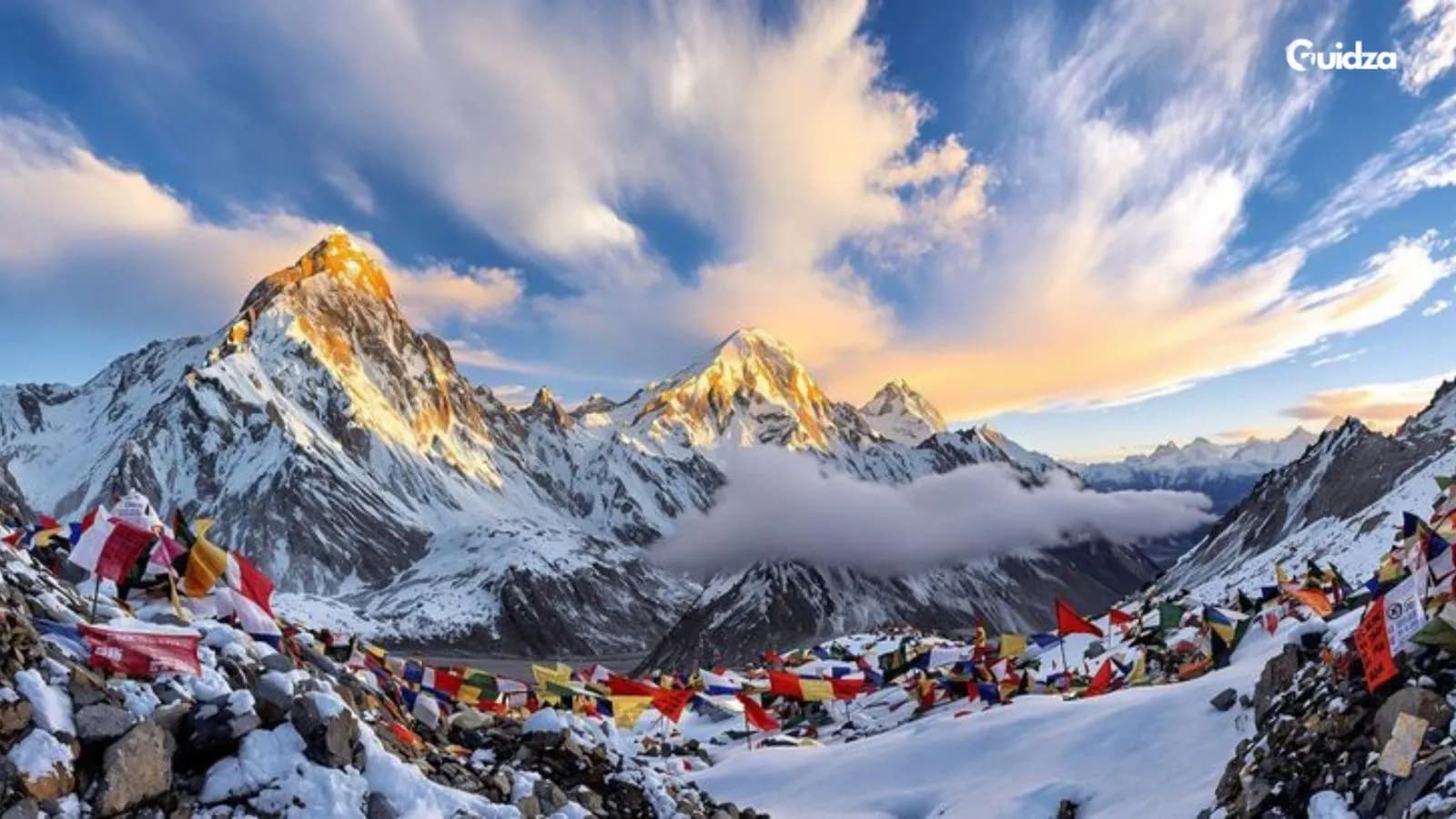
Nepal packs an unusual amount into a small area — Himalayan views, ancient temple squares, jungle safaris, and mountain towns, all within a few hours of each other. For travelers with about a week to spare, this makes it one of the more rewarding short international trips available from India.
This 7 day Nepal itinerary is built around three main stops — Kathmandu, Pokhara, and Chitwan — which together give a good mix of culture, mountains, and wildlife without feeling rushed. Below, you'll find a day-by-day plan, along with practical information on budgeting, timing your trip, and getting around, so you can adapt it to your own pace.
Why 7 Days Works Well for Nepal
Seven days is enough time to see Nepal's three most popular regions without constantly being on the move. It's not enough for a serious trekking expedition into the high Himalayas, but it comfortably covers city sightseeing in Kathmandu, lake and mountain views in Pokhara, and a jungle safari in Chitwan.
If you're looking for a broader Nepal travel guide before narrowing down to a week-long plan, it helps to know that most short trips are built around these same three towns, simply in different proportions. This itinerary leans slightly toward Pokhara, since it tends to be the most memorable stop for first-time visitors, but you can easily rebalance the days based on your own interests.
Day-by-Day Nepal Itinerary
Day 1: Arrival in Kathmandu
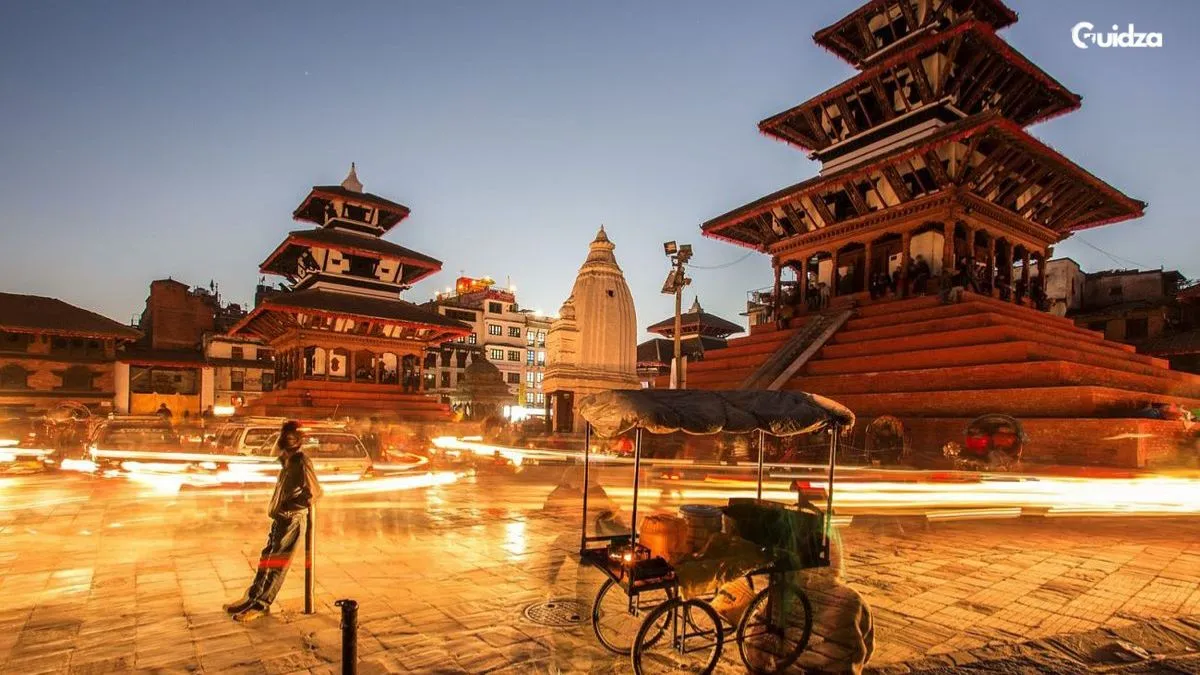
Most international flights land in Kathmandu, so this is where the trip begins. After checking in, spend the afternoon easing into the city rather than rushing straight into sightseeing — jet lag and altitude (Kathmandu sits at around 1,400 metres) can catch travelers off guard on day one.
- Walk around Thamel, Kathmandu's main tourist and shopping district
- Try your first Nepali meal — a thali or momos are a good place to start
- Pick up any trekking gear or last-minute essentials, since Thamel has plenty of outdoor shops
This is a light day by design, mainly to let you settle in before covering Kathmandu's main sights on Day 2.
Day 2: Kathmandu Sightseeing
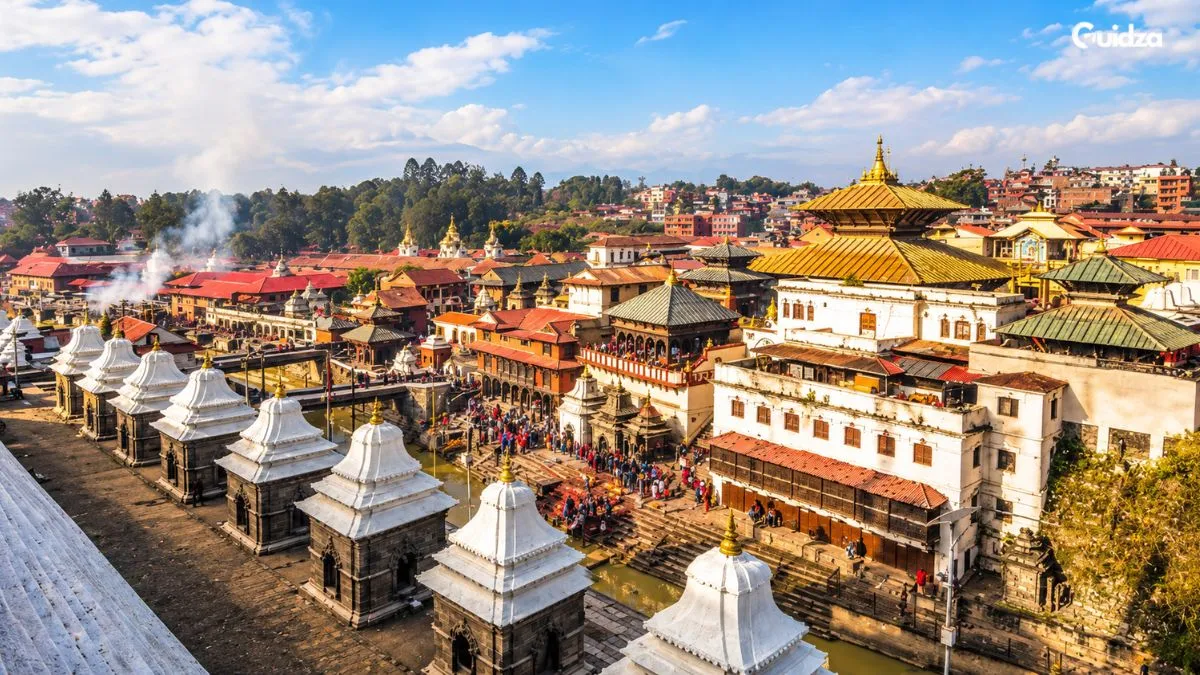
This is the main day for exploring things to do in Nepal's capital. A private guide or taxi for the day makes it easier to cover the following sites without too much back-and-forth.
- Kathmandu Durbar Square – a UNESCO World Heritage Site with palace buildings, temples, and courtyards
- Swayambhunath (Monkey Temple) – a hilltop stupa with panoramic views over the Kathmandu Valley
- Pashupatinath Temple – one of the most significant Hindu temples dedicated to Shiva, situated on the Bagmati River
- Boudhanath Stupa – one of the largest stupas in the world and an important Buddhist pilgrimage site
Covering all four sites in one day is possible but full — if you'd rather go at a slower pace, Boudhanath and Pashupatinath can be combined in the afternoon while Durbar Square and Swayambhunath work well together in the morning. This is really the core of any Kathmandu itinerary, and most travelers find a full day is enough before moving on.
Day 3: Travel to Pokhara
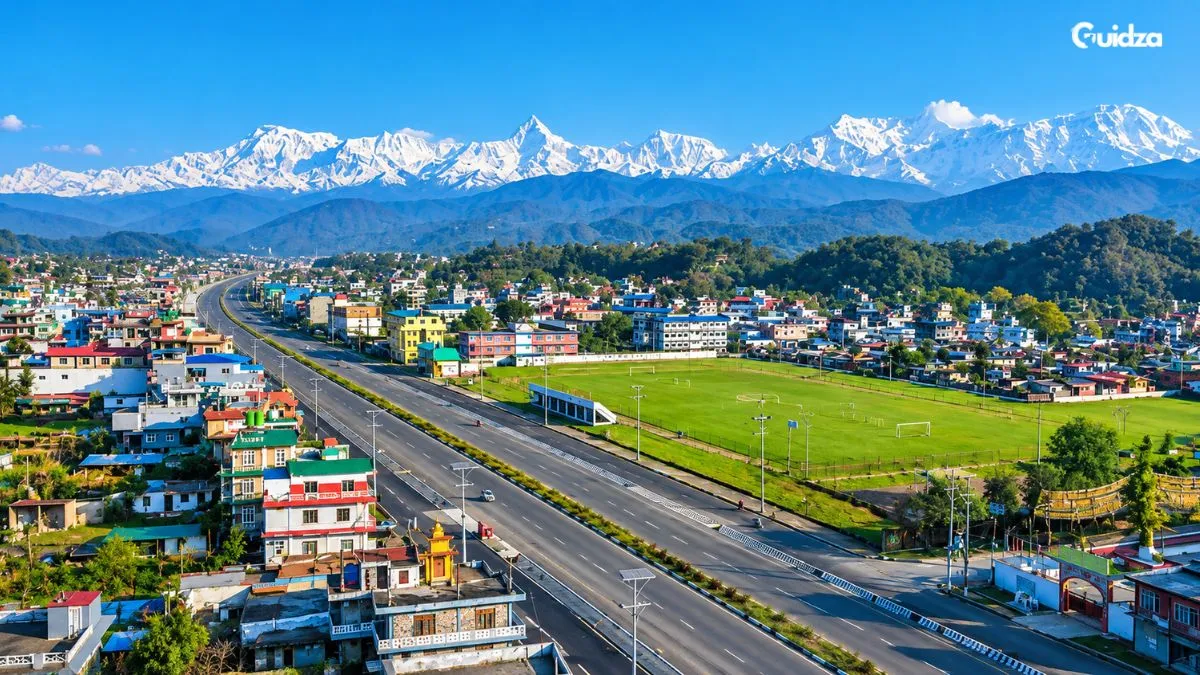
Pokhara is roughly 200 kilometres from Kathmandu. You can get there by:
- Domestic flight – around 25–30 minutes, the fastest option
- Tourist bus – around 6–8 hours by road, scenic but long
- Private car – similar duration to the bus, with more flexibility to stop en route
Flying is the more time-efficient choice if you'd rather spend the saved hours in Pokhara itself. Once you arrive, spend the rest of the day at a relaxed pace around Phewa Lake — the lakeside area (Lakeside/Baidam) is where most restaurants, cafés, and guesthouses are concentrated, and it's a pleasant place to simply walk around as the sun sets, with the Annapurna range visible in the background on clear days.
Day 4: Pokhara Sightseeing
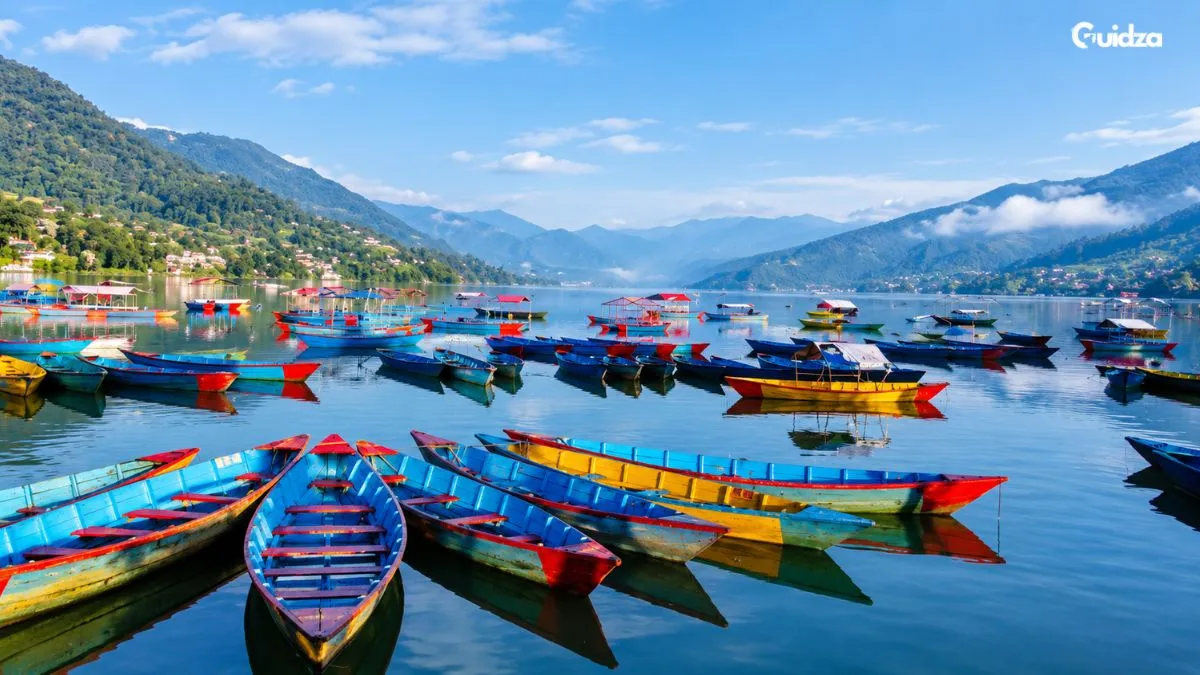
This is the main day to explore what a Pokhara itinerary typically includes — a mix of viewpoints, lake activities, and a couple of standout sights.
- Sarangkot sunrise – a popular early-morning viewpoint for watching sunrise over the Annapurna and Machapuchare peaks
- World Peace Pagoda – reachable by boat across Phewa Lake followed by a short hike, or by road
- Davis Falls and Gupteshwor Cave – a waterfall and adjoining cave system, usually visited together
- Boating on Phewa Lake – a relaxed way to spend an hour or two, with the Tal Barahi Temple sitting on a small island in the lake
Pokhara is also the main base for travelers heading into the Annapurna region for trekking, so if you have an extra day to spare later, a short add-on hike (such as to Australian Camp or Poon Hill) is worth researching separately — though that falls outside the scope of a standard 7-day plan.
Day 5: Travel to Chitwan
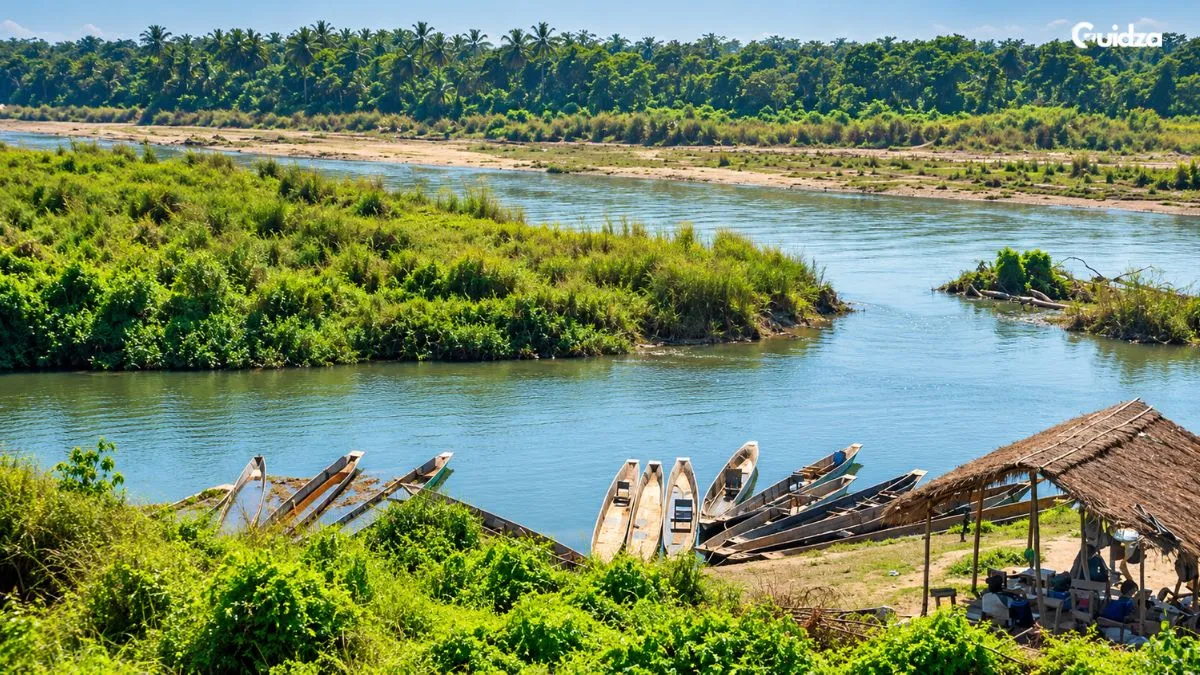
From Pokhara, Chitwan National Park is about 5–6 hours by road, or a short domestic flight followed by a transfer. Most travelers arrive by early-to-mid afternoon and spend the rest of the day settling into their lodge, since safari activities typically begin the following morning.
- Many jungle lodges include orientation activities on arrival, such as a short village walk or a cultural program in the evening
- This is also a good time to confirm your safari schedule for the next day with your lodge
Day 6: Chitwan Jungle Safari
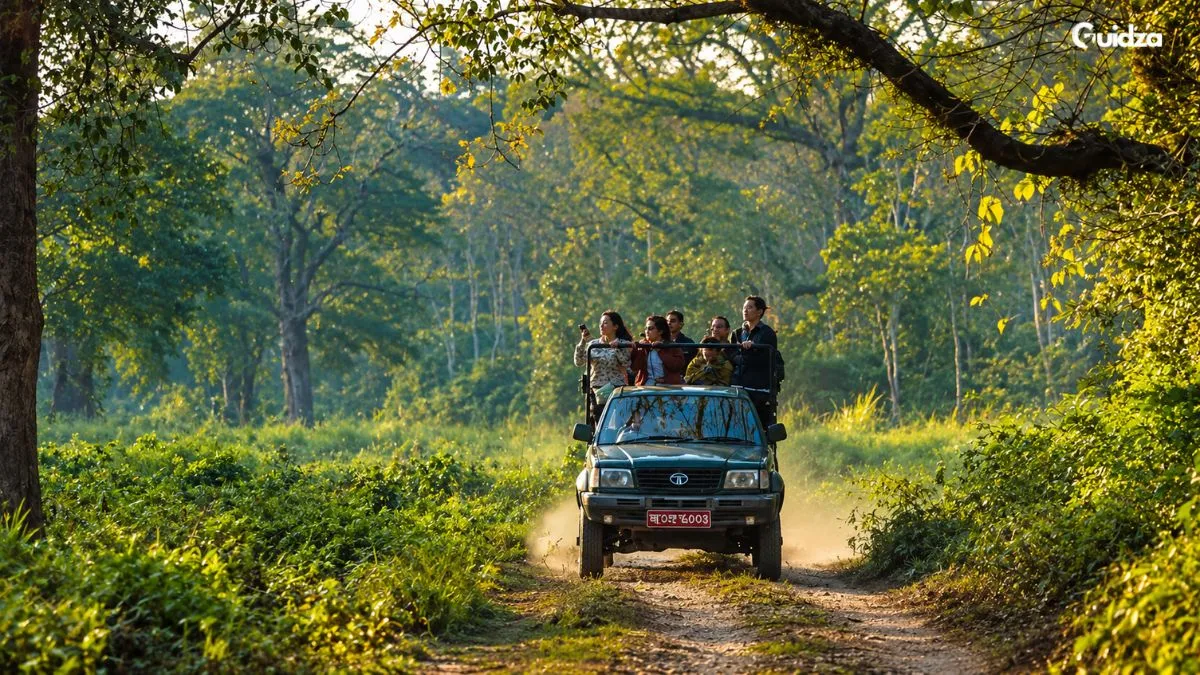
Chitwan National Park is Nepal's most visited wildlife reserve and a UNESCO World Heritage Site, known for one-horned rhinos, along with the possibility of spotting deer, crocodiles, and a wide range of birdlife. A Chitwan itinerary usually centers around a full day of activities like these:
- Jeep safari – the most common way to explore the park's grasslands and forest in search of wildlife
- Canoe ride – a quieter way to spot birds and crocodiles along the river
- Village walk – visiting a nearby Tharu village to learn about local culture and traditions
- Elephant breeding center visit – if available through your lodge, worth checking current practices and animal welfare standards before booking
Sightings of tigers or rhinos are never guaranteed on any single safari, so it's worth going in with realistic expectations — the broader experience of being in the park is worthwhile even on a quieter wildlife day.
Day 7: Return to Kathmandu and Departure
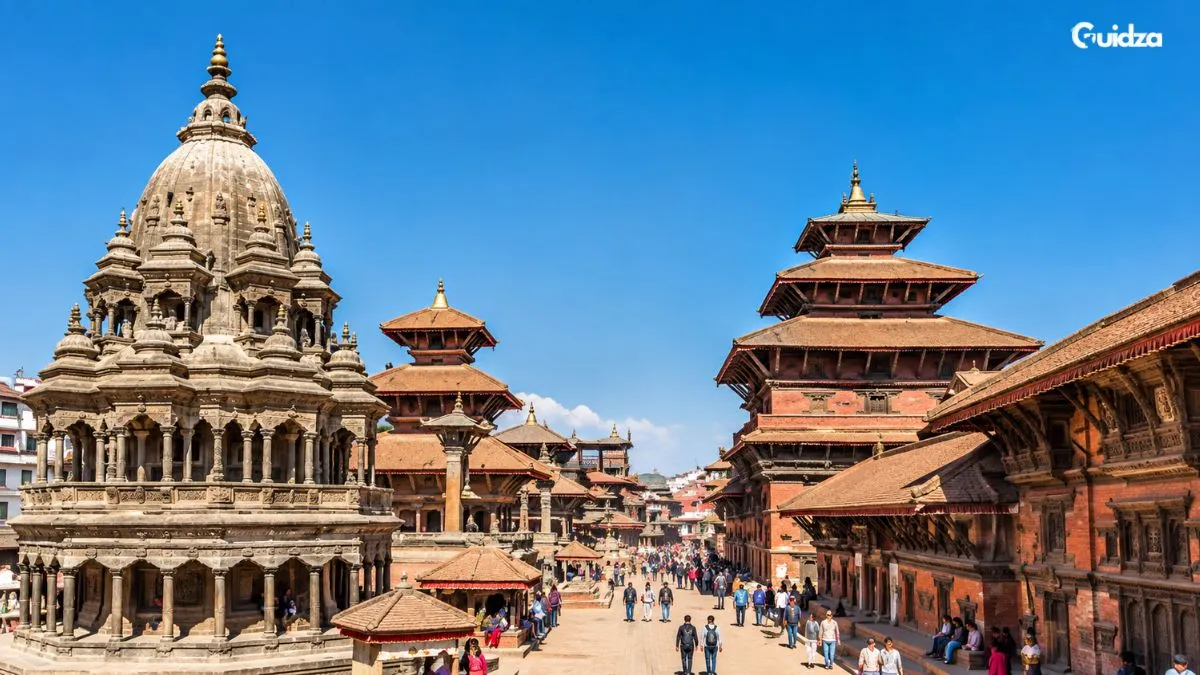
On the final day, most travelers head back to Kathmandu for their departure flight. A domestic flight from Bharatpur (near Chitwan) to Kathmandu takes about 20 minutes and is generally the more convenient option on a tight final day, compared to the 5–6 hour road journey.
If your international flight is later in the day, this can also work as a light buffer day for any last-minute shopping in Thamel or a final walk around Kathmandu before heading to the airport.
Best Time to Visit Nepal
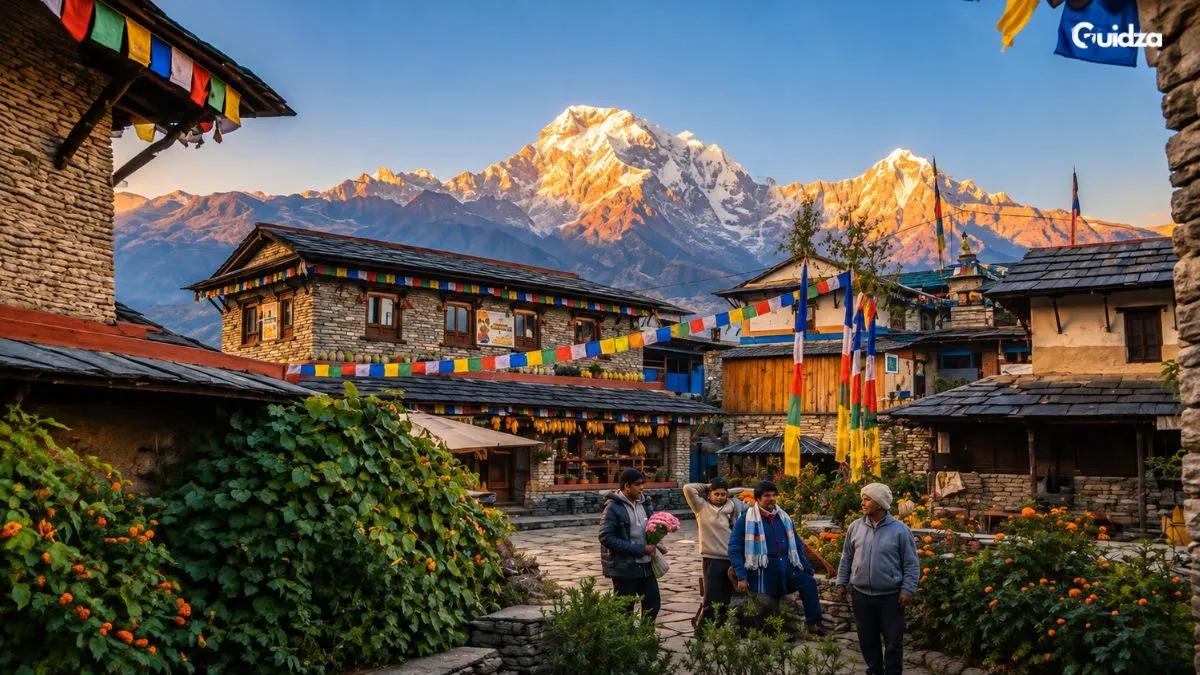
Nepal has fairly distinct seasons, and the time of year affects both mountain visibility and trekking or safari conditions.
- October to November – widely considered one of the best windows, with clear skies and comfortable temperatures after the monsoon
- February to April – another favourable stretch, with rhododendrons in bloom in the hills during spring
- December to January – generally dry and clear, though cold, especially in the evenings in Pokhara and at altitude in Kathmandu
- June to September – the monsoon season, with more rainfall and reduced mountain visibility, though Chitwan's wildlife can still be seen
For the best time to visit Nepal specifically for mountain views and comfortable sightseeing, autumn (October–November) and spring (March–April) are usually recommended. Weather can vary year to year, so it's worth checking closer to your travel dates rather than planning entirely around seasonal averages.
Nepal Travel Budget for 7 Days
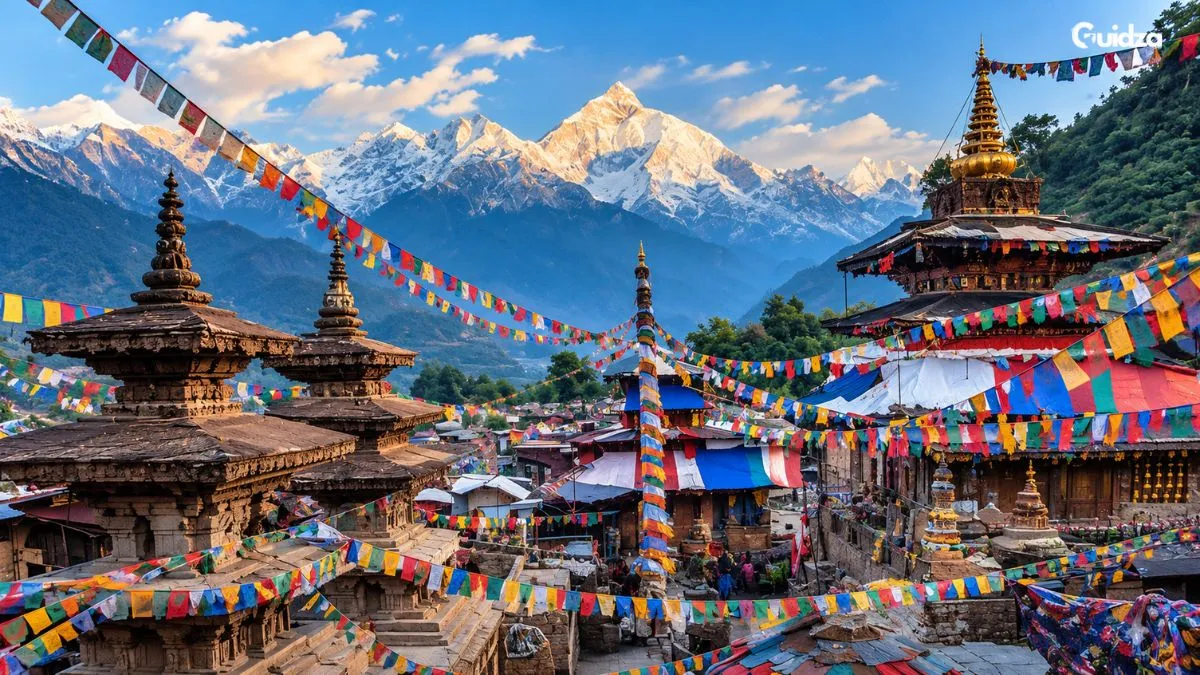
Costs in Nepal can vary quite a bit depending on your travel style, and prices do shift over time, so treat this as a general framework rather than fixed figures — it's worth checking current rates before finalising your budget.
- Domestic flights – Kathmandu–Pokhara and Chitwan–Kathmandu flights are a meaningful cost if you choose to fly rather than take the bus
- Accommodation – ranges from budget guesthouses to mid-range hotels and jungle lodges in Chitwan, which tend to price safaris and meals into the room rate
- Food – generally affordable, especially local Nepali and Indian-style meals; tourist-area restaurants in Thamel and Pokhara's Lakeside cost more
- Activities – entry fees for Durbar Square, Swayambhunath, Pashupatinath, and Chitwan National Park's safari packages are separate costs worth factoring in
- Local transport – taxis, private cars, and tourist buses vary in price depending on distance and comfort level
A broader Nepal travel budget guide will go into more detail on cost breakdowns by travel style. As a general planning point, a private-car, mid-range version of this itinerary will cost more than a backpacker-style trip using buses and guesthouses — deciding your style early makes the rest of the planning easier.
Nepal Travel Tips for First-Time Visitors
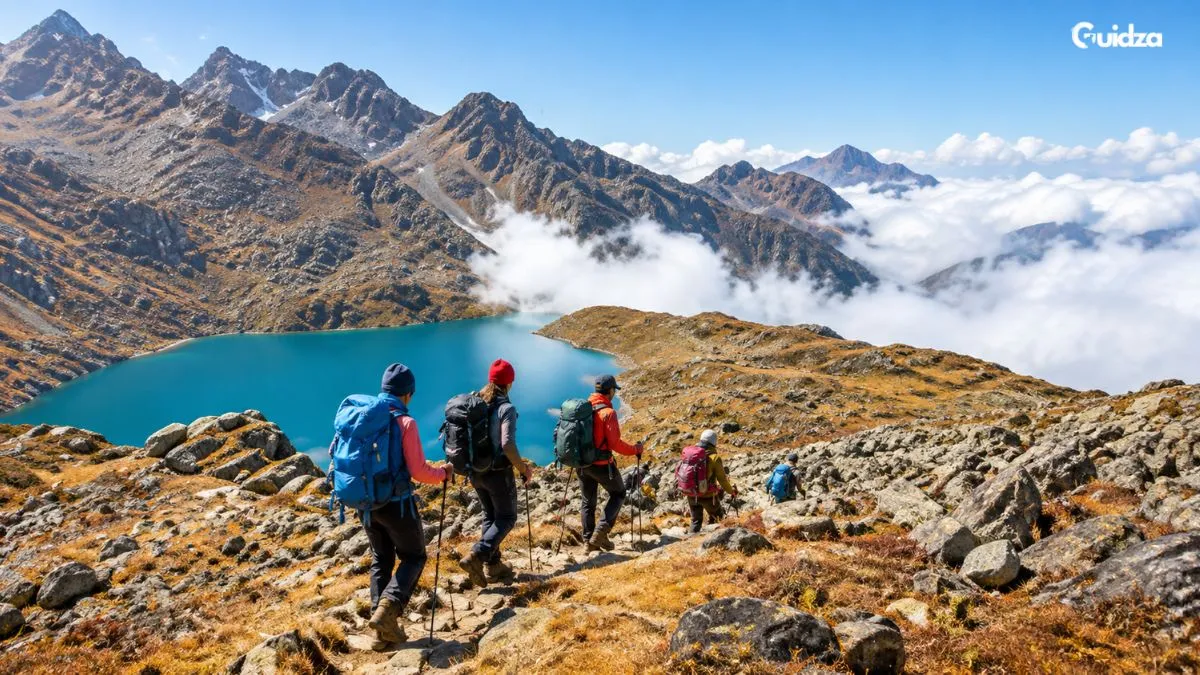
- Currency – Nepal uses the Nepalese Rupee (NPR); Indian Rupees are widely accepted in many tourist areas, though it's worth carrying local currency for smaller vendors
- Entry requirements – Indian nationals generally do not need a visa to enter Nepal, but it's worth carrying valid photo ID and confirming current entry requirements before you travel, since rules can change
- Altitude – Kathmandu and Pokhara sit at moderate altitude; most travelers won't notice significant effects, but it's worth pacing yourself on Day 1
- SIM cards – local SIM cards are available at the airport and in Thamel for travelers who want data access throughout the trip
- Cash on hand – ATMs are available in Kathmandu and Pokhara, but it's worth carrying cash for Chitwan and smaller towns where card acceptance is limited
- Domestic flights – schedules can shift due to weather, particularly in the hills, so it's worth building in a little buffer time if your international flight is the same day as a domestic connection
- Layering for weather – temperatures vary between Kathmandu, Pokhara, and Chitwan, so pack layers rather than dressing for just one climate
- Temple etiquette – dress modestly and be mindful of photography restrictions at religious sites, particularly around cremation areas at Pashupatinath
How to Adjust This Itinerary
This plan assumes a first-time visit focused on sightseeing rather than trekking. A few common ways travelers adjust it:
- More time in Pokhara – if mountain views and a relaxed pace matter more to you than an extra Kathmandu day, shifting a day from Kathmandu to Pokhara is a common swap
- Skipping Chitwan – if wildlife isn't a priority, those two days can be added to Pokhara or used for a short trek from Pokhara instead
- Adding a short trek – travelers with a little more time sometimes extend the trip by 2–3 days to fit in a short trek such as Poon Hill from Pokhara
There's no single correct version of this itinerary — the three-stop structure covering places to visit in Nepal like Kathmandu, Pokhara, and Chitwan is simply a reliable starting framework that works for most first-time visitors.
Planning Your Nepal Trip
Once you've settled on your route, it's worth locking in a few things ahead of time — particularly your Chitwan safari package and Kathmandu–Pokhara flights, since both can fill up during peak season (October–November especially). Guidza's Nepal tours and activities are worth browsing at this stage if you'd like help filling in specific experiences, from Kathmandu heritage walks to Chitwan jungle safaris, around the itinerary outlined here.
Frequently Asked Questions
Is 7 days enough for a Nepal trip?
Yes, for a first visit focused on Kathmandu, Pokhara, and Chitwan. Seven days isn't enough for a major Himalayan trek, but it comfortably covers city sightseeing, lake and mountain views, and a jungle safari.
What is the best 7 day Nepal itinerary for first-time visitors?
A common and reliable structure is two days in Kathmandu, two to three days in Pokhara, and two days in Chitwan, with travel days built in between. This covers culture, mountains, and wildlife without excessive backtracking.
Should I fly or take the bus between Kathmandu, Pokhara, and Chitwan?
Domestic flights save considerable time — around 25–30 minutes compared to 6–8 hours by road — and are worth it if you'd rather spend those hours sightseeing. Buses and private cars are more budget-friendly and let you stop along the way, but eat into your limited days.
What is the best time to visit Nepal?
October to November and March to April are generally considered the best windows, with clearer skies and comfortable temperatures. Weather can vary by year, so it's worth checking closer to your travel dates.
Is Nepal expensive for Indian travelers?
Nepal is generally considered an affordable destination, especially for Indian travelers, given the currency and cost of living. Domestic flights, jungle lodges in Chitwan, and guided activities are the main costs that can add up, so it's worth budgeting for those separately from daily expenses.
Do Indian travelers need a visa for Nepal?
Indian nationals generally do not need a visa to visit Nepal, but entry requirements can change, so it's worth confirming the latest rules and required documents before you travel rather than relying on older information.